
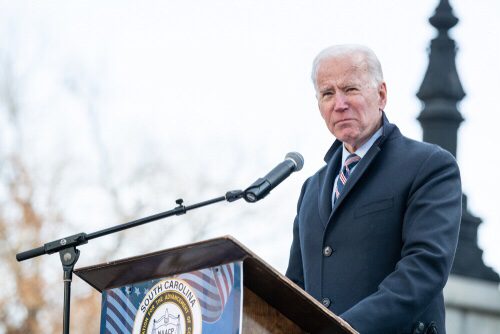
The Biden Administration’s ambitious plan to erase $400 billion in student debt was dealt a blow as the Supreme Court rejected it on Friday.
In a 6-3 vote, the Court’s conservative justices determined that the administration lacked the authority to cancel such a substantial amount of debt without congressional approval, concluding that the HEROES Act did not provide an exception.
“Six states sued, arguing that the HEROES Act does not authorize the loan cancellation plan,” Chief Justice John Roberts said in a statement. “We agree.”
The HEROES Act, initially signed into law in 2001 as a response to the 9/11 attacks, granted the secretary of education the power to “waive or modify any statutory or regulatory provision” to protect individuals impacted by acts of terrorism.
In 2003, the law was expanded to include borrowers affected by wars or national emergencies.
During the coronavirus pandemic, the Trump Administration utilized the HEROES Act to temporarily suspend student loan payments and interest accrual to assist borrowers.
The Biden Administration extended this relief and, in 2022, unveiled a plan to forgive $10,000 in student debt for individuals earning under $125,000 per year and $20,000 for Pell Grant recipients. The payment pause has already cost the federal government over $100 billion, and Biden’s proposed debt forgiveness plan would have added an additional $400 billion to that tally.
The plaintiffs argued that pausing payments during a national emergency and completely forgiving $400 billion in debt are fundamentally distinct actions.
“Cancelling hundreds of billions of dollars in student loans – through a decree that extends to nearly all borrowers – is a breathtaking assertion of power and a matter of great economic and political significance,” the lawyer said, adding that it “does not authorize the program, much less with the clarity this court’s precedent requires.”
Chief Justice Roberts likened the idea that the authority to “waive or modify” student debt encompasses massive forgiveness to claiming that the French Revolution merely “modified” the status of the French nobility.
In a dissenting opinion, liberal Justice Elena Kagan argued weakly that the six suing states had no right to challenge the case because its outcome would hold no personal value for them.
“The plaintiffs in this case are six states that have no personal stake in the Secretary loan forgiveness plan. They are classic ideological plaintiffs: They think the plan a very bad idea, but they are no worse off because the Secretary differs.” Kegan said.
Following the Supreme Court’s ruling, an estimated 43 million borrowers who would have been eligible for debt forgiveness under Biden’s plan can expect to resume making payments within the next month or two.
However, the Administration has introduced alternative measures to ease the transition.
President Biden outlined some of these actions during a press conference on Friday, which include utilizing the Higher Education Act of 1965 to provide debt relief, granting borrowers a 12-month grace period without penalties for late or missed payments, and offering an income-based repayment plan for low-income borrowers that reduces payment obligations and forgives balances after a shorter period of time.
