
New study shows that teen overdose deaths have risen across the U.S., according to the National Center for Health Statistics on Wednesday.
At least 107,622 people have died from overdoses in 2021, a significant increase from the estimated 93,655 deaths in 2020. The 100,000 threshold was passed in November 2021.
This marks a stark surge from what was a stable rate over the past decade. For example, the fatal overdose rate in 2070 was only 2.4 deaths per 100,000.
“It is unacceptable that we are losing a life to overdose every five minutes around the clock,” said Dr. Rahul Gupta, director of the White House Office of National Drug Control Policy.
Axios reported that the COVID-19 pandemic caused a sharp uptick in drug overdoses but disclosed that their data is incomplete, as many of the deaths require more investigation to confirm a cause.
“That is why President Biden’s new National Drug Control Strategy signals a new era of drug policy centered on individuals and communities, focusing specifically on the actions we must take right now to reduce overdoses and save lives,” he added.
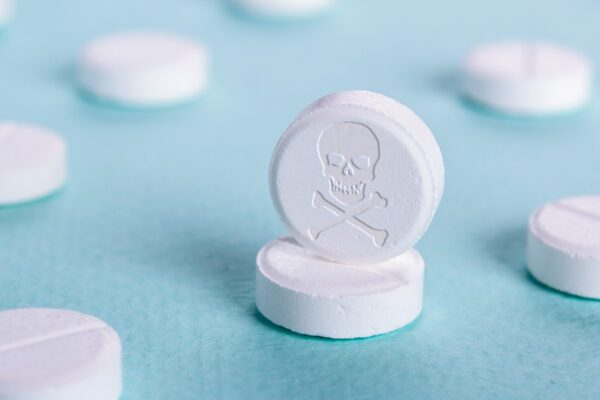
Most of the deaths are linked to counterfeit prescription medications that have been contaminated with fentanyl, according to Dr. Nora Volkow, director of the National Institute on Drug Abuse.
“Teenagers don’t seek out illicit opioids, [but] they do seek out prescription opioids and that has always been one of their favorite drugs: Vicodin, OxyContin, hydrocodone,” she said. “It is estimated that at least one-third of those illicitly manufactured pills are contaminated with fentanyl.”
Joseph Friedman, an addiction researcher and MD/Ph.D. candidate in the UCLA-Caltech Medical Scientist Training Program, called the spike “unprecedented,” and feared that it could be the first sign of a longer-term trend.
“This is very concerning because in other subgroups of the population, when overdose death rates start to increase exponentially after having been flat, they tend to continue to do so for a while,” Friedman said.
He also suggested putting teens in education programs that provide them with accurate information on the dangers of using drugs to address the problem.
“Providing this information is likely to help kids not do these drugs,” the researcher said. “If they understand that they’re potentially lethal, I think that can only be helpful in terms of them making smarter decisions.”
