
WASHINGTON – The United States House of Representatives approved a massive bill to fund the Department of Defense for the fiscal year 2023, setting in the next few days a final vote in the Senate that would send the $858 billion giant to the desk of President Joe Biden where he is required to sign it.
The bill passed the Democratic-majority House with a strong bipartisan majority, 350 votes to 80.
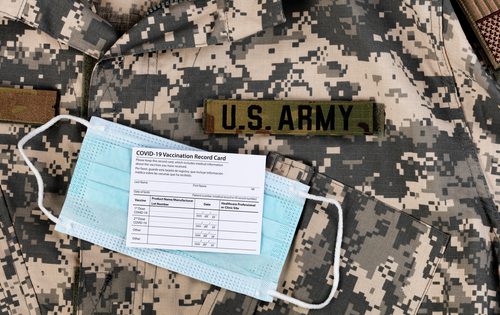
Among the more than 4,000 pages of legislation is a requirement that the Pentagon abandons its Covid vaccination mandate for active duty members within 30 days of its enactment.
The mandate, originally instituted last year, recently emerged as a lightning rod for conservative Republicans, who threatened to blow up the entire bill if it wasn’t revoked.
The National Defense Authorization Act, or NDAA, was released Tuesday night after weeks of behind-the-scenes negotiations.
Biden and Defense Secretary Lloyd Austin has publicly stated that they oppose the provision ending the mandate on vaccines.
We are working hard to ensure the final NDAA safeguards our military servicemembers from the Biden administration’s COVID vaccine mandate.
— Sen. Marsha Blackburn (@MarshaBlackburn) December 5, 2022
As Joe Biden said himself — the pandemic is over.
But the Democratic chairman of the House Armed Services Committee, Rep. Adam Smith of Washington, said on the House floor Thursday that the time was right to end the vaccine requirement. His comment was seen as a strong signal that the White House would support the final bill.
Biden’s press secretary Karine Jean-Pierre on Wednesday neither confirmed nor denied that Biden would sign the bill, instead telling reporters that Biden “will review the NDAA in its entirety and make his judgment on it.”
The House was originally scheduled to vote on the bill Wednesday afternoon. But its procedural path through the Rules Committee stalled after members of the Congressional Black Caucus tried to force the inclusion of the John Lewis Voting Rights Act into the bill.
The NDAA is an annual tradition in Congress, where it is considered a “pass” law because its enactment is necessary for service members to receive their pay and benefits on time after January 1, 2023.
