
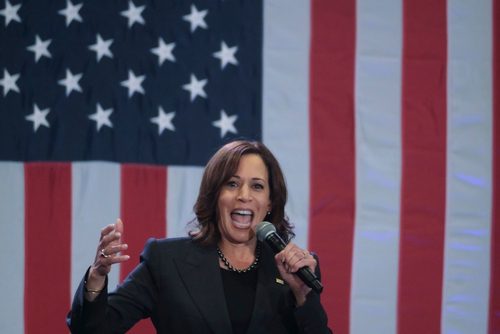
Vice President Kamala Harris is once again playing the race and gender cards for the lack of media coverage on her so-called achievements.
During an interview with The Washington Post, Harris claimed that she accomplished many things but that the media didn’t cover her as fairly as she would’ve liked.
“There are things that I’ve done as vice president that fully demonstrate the strength of my leadership as vice president that has not received the kind of coverage that I think [the] Dobbs [decision] did receive,” Harris told columnist Jonathan Capehart.
Capehart agreed and said that the vice president gets little attention compared to President Joe Biden.
“Harris is right about that. Despite having a television and a print pool reporter at most of her public events, the vice president garners little attention. Sometimes the office is frustrating — as one of her predecessors famously put it, ‘not worth a bucket of warm, ‘um, spit,’” he wrote.
“And much of the attention she has received, especially in her first year, has been rough. Stories about staff departures were routinely hyped as disarray in narratives that unfairly called into question Harris’ competence,” he continued.
The columnist then blamed Harris’ lack of media coverage on her being a female as well as being a person of color.
“[T]he nation’s first Black female and first South Asian vice president have also had to contend with the negative reactions and low expectations that come with shattering ossified notions of who should be in the position,” Capehart wrote.
But he later commended the vice president for having a “banner year,” characterized by “domestic barnstorming and high-wire diplomacy.”
This comes after Harris expressed frustration with the media last year, suggesting that she would receive more coverage if she were a white guy, after confiding in her close friends that she was finding it difficult to carry out the tasks assigned to her.
“Ms. Harris has privately told her allies that the news coverage of her would be different if she were any of her 48 predecessors, all of whom were white and male,” the New York Times reported, adding “she also has confided in them about the difficulties she is facing with the intractable issues in her portfolio, such as voting rights and the root causes of migration.”
