
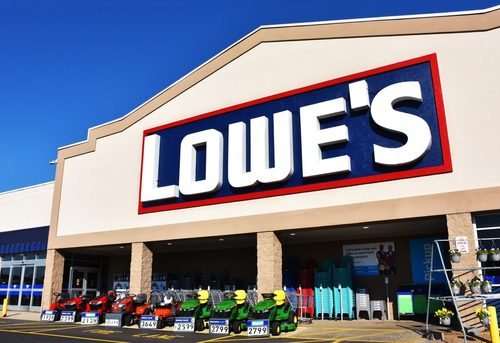
Mega hardware store Lowe’s is expected to lose nearly $1 billion due to rampant shoplifting across its branches.
According to CNBC, the retailer’s shrinking and theft are to blame for the losses. Lowe’s has some of the highest shrink numbers among the companies.
“During its second quarter earnings call with analysts, the company said shrink was in line with the year-ago period. But its annual securities filing offered more detail: the retailer revealed that its shrink in fiscal 2022 ballooned to $997 million, up from $796 million in fiscal 2021,” the news outlet reported.
More and more retailers have specified shrink as a source of losses over the past few quarters and have blamed theft to the drain on profits. However, they haven’t provided details regarding the actual costs of inventory losses. Expers said that some businesses may be citing crime as an excuse to divert attention from other operational concerns that result in decline, such as poor inventory management and workforce issues.
Sonia Lapinsky, a partner and managing director with AlixPartners’ retail practice, said that companies that have disclosed shrink numbers show that they are aware of the downturn.
“Are you clearing way more inventory because you mis-planned it and you mis-bought it and that’s what’s really getting a bigger profitability hit?” Lapinksy wondered. “But because everybody’s saying ‘let’s just blame the theft that’s increased and that’s out of my control,’ let me tell the Street that that’s why it’s happening and not disclose what’s really going on in operation.”
To determine how much shrink is costing retailers and how it compares to losses from other factors, such as excessive discounts, CNBC examined securities filings, earnings calls, press releases and other publicly available records.
“On an annual basis, Lowe’s shrink has been steadily increasing at a rate that’s disproportionate to its revenue increases,” the business news network explained. “By the end of fiscal 2021, the hit to profits climbed to $796 million, or 0.8% of sales. During fiscal 2022, it rose to $997 million, or 1.03% of sales.”
“The inventory losses are still in line with the industry standard of about 1% to 1.5% of sales and tend to be less than profit drains from other factors,” the report continued.
