
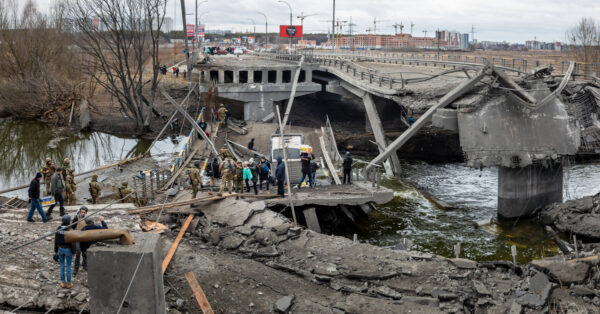
Direct military activity poses a hazard to Ukraine’s ecosystems, raising the likelihood of landscape destruction, aggravating deforestation, and igniting forest fires. However, the dispute has a negative influence on conservation efforts as well.
Deforestation and pollution of air, water, and soil are only some of the environmental consequences of Russia’s ongoing invasion of Ukraine, according to a United Nations assessment.
In a United Nations Environment Program (UNEP) study, nearly all of the country’s regions were affected. Despite the agency’s inability to perform a complete surgical procedure, preliminary results are troubling.
Nuclear power plants and facilities have been damaged, one of the biggest worries. It is located in the occupied city of Zaporizhzhya, which was the scene of fierce tank combat earlier this month.
Ukraine’s enormous woods, which make up 16 percent of the country’s land, were devastated by bombings of oil storage tanks, refineries, gas facilities, and distribution pipelines.
Ukraine’s Ministry of Ecology and Natural Resources predicts that the destruction of 42,000 acres in the newly conquered eastern city of Lysychansk will cost roughly $135 million.
As a result of chemical plant leaks and spills, soil, groundwater, and rivers around the country have been affected. In addition, the decomposition of animals and human remains buried during the fighting occurs in the soil. This has had an effect on the water.
Mariupol’s destruction of sewage treatment facilities has heightened concerns about the spread of cholera and dysentery.
“The mapping and preliminary screening of environmental threats only help to show that conflict is very literally poisonous,” UNEP Executive Director Inger Andersen stated. ” There must be an immediate cessation to the savagery inflicted by this mindless devastation. The environment is about people and their well-being, clean air and water, and whole-food systems,” he writes.
Tailings storage facilities (TSFs) are ground holding places for uneconomical ore and silt from the industrial output previously damaged by storms. With 465 TSFs, Ukraine has 6 billion tons of trash stored, and 200 are in eastern Ukraine, where most conflict has occurred.
Ukraine’s vast expanses of woods, meadows, and mountains have been left unspoiled by cities or industry. Ukraine is also home to 63,000 rivers, the greatest of which, the Dnipro, is the third-longest river in Europe.
According to the Ministry of Ecology and Natural Resources, environmental crimes costing $700 million have been reported as of May.
Ukraine must utilize all possible international legal tools to defend its inhabitants and the environment from the repercussions the ‘Russian world brings,’ says Environmental Protection Minister Ruslan Stilets on his ministry’s official website, while the occupants are bombarding industrial facilities and causing large-scale accidents on its land.
Is Russia’s invasion of Ukraine motivated by Ukraine’s abundant natural resources? However, military and strategic battles are not the ends of the narrative. For political reasons, Ukraine’s wealth of rare-earth elements is also a significant factor in Ukraine’s economic and political decisions.
